

Scotland Trip:
Leg 5: Bangor to Campbeltown, marooned by fog, Lochranza (72 nm).
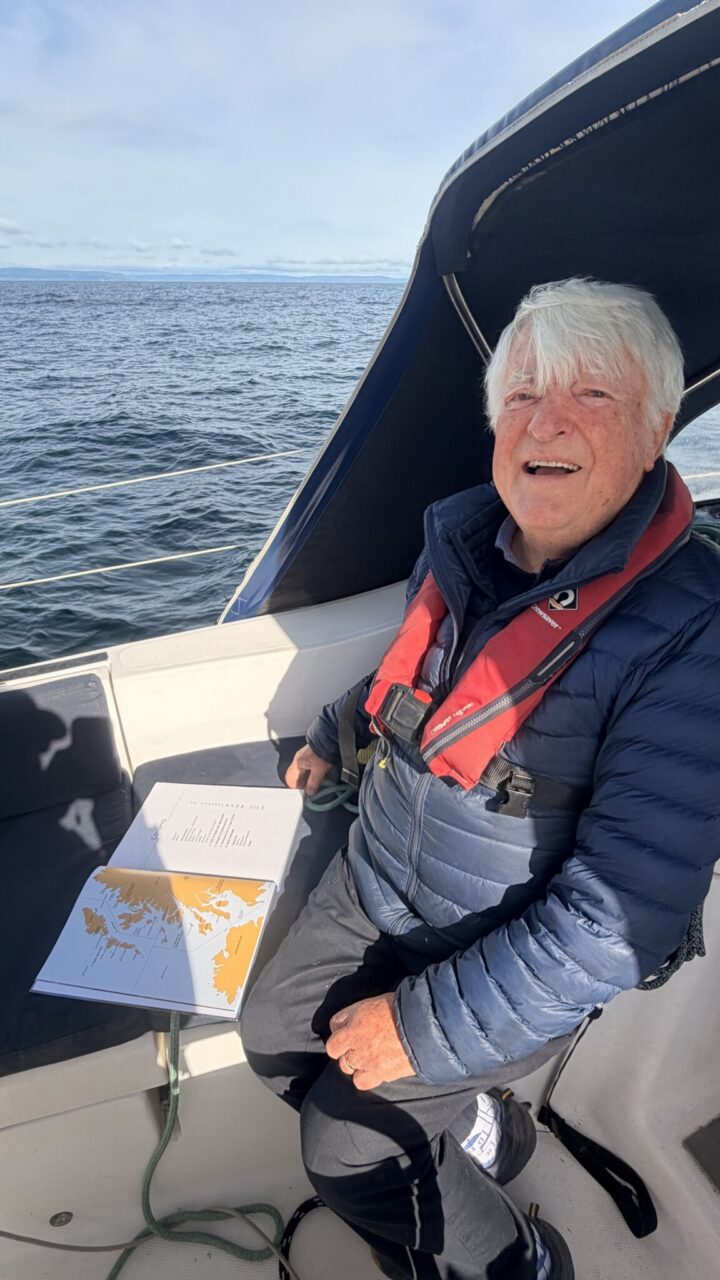
Hitting the correct tides at the Mull of Kintyre was going to require another early start, but having broken the journey by ducking into Bangor, we would be arriving into Campbeltown nice and early. The weather was looking sunny with light winds from the north west, which would mean motor sailing some of it and a nice broad reach for the rest. I was up and at it, and woke the crew at 5am and after a light breakfast we were off, leaving Bangor Marina and crossing Belfast Lough as the sun came up.
We had company. As I raised my sails I looked back and another 20 boats were leaving the harbour behind us. Either it was an organised club race, or everyone had the same idea to try to catch the north going current by leaving just after high water. After all the anticipation the crossing was gentle and balmy with light winds and a calm sea. In addition, after the previous crossings I had done to Scilly and to France, I had not expected line of sight navigation. In one camera frame I could get the coast of Antrim, Islay, the Mull of Kintyre and Isle of Arran. In the other direction I could clearly see the Rhins of Galloway and the Isle of Man in the distance. The proximity of Ulster to Scotland explained a lot about its history.
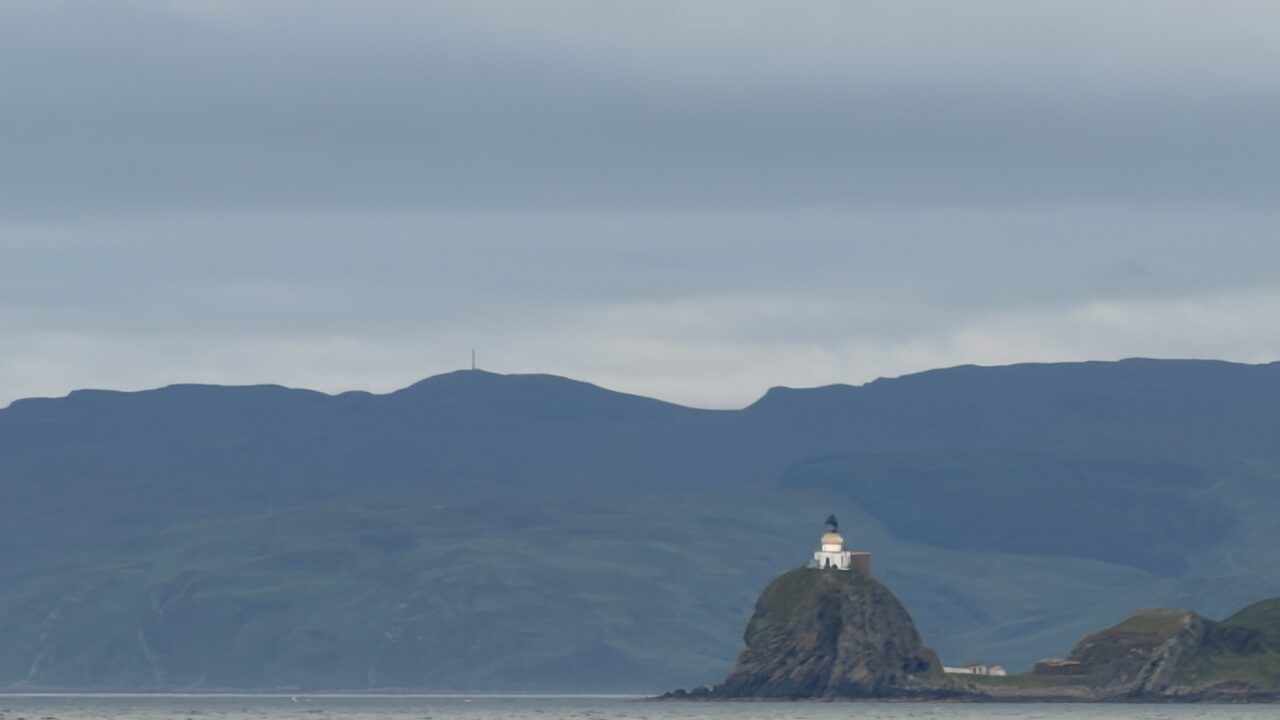
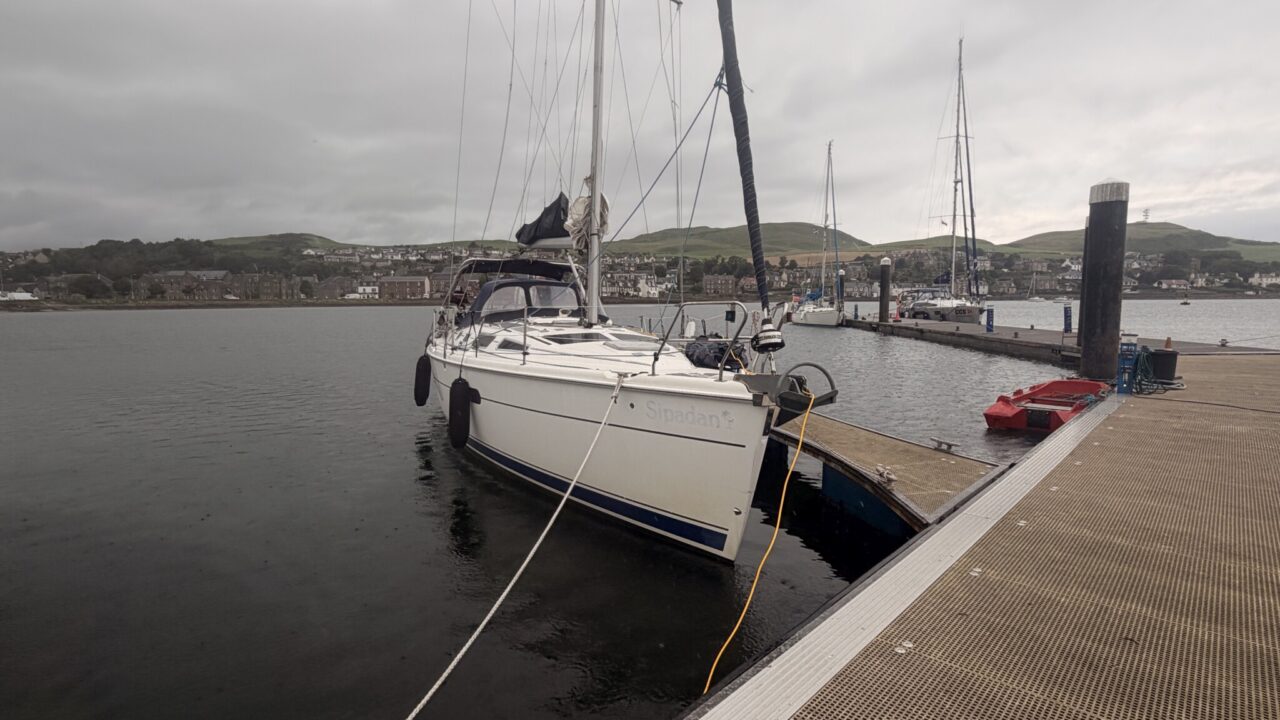
As we progressed on our journey, with Belfast Lough receding behind us, and the mist-shrouded Mull of Kintyre ahead, the white sails of our yachting guard of honour also receded, silhouetted against the rocky coast of Antrim. They were clearly bound for somewhere further up the Irish coast, possibly Rathlin Island, also visible on the horizon. From halfway across the North Channel I called the harbour master at Campbeltown. It seemed strange to hear the thick Scottish accent so close by, but I suppose the Ulster accent is not so very different. Approaching the Mull of Kintyre I could see the lighthouse at Sanda Island. As I passed it I radioed Belfast Coast Guard to close out my traffic routing VHF call as they had warned me about a radio communications shadow, once into Campbeltown Loch. We approached Davaar Island which is very high and dramatic with a very picturesque lighthouse. After our light wind passage, the weather got worse and worse as we came around the island to approach the harbour. We were soon alongside the pontoon and went to explore the town.
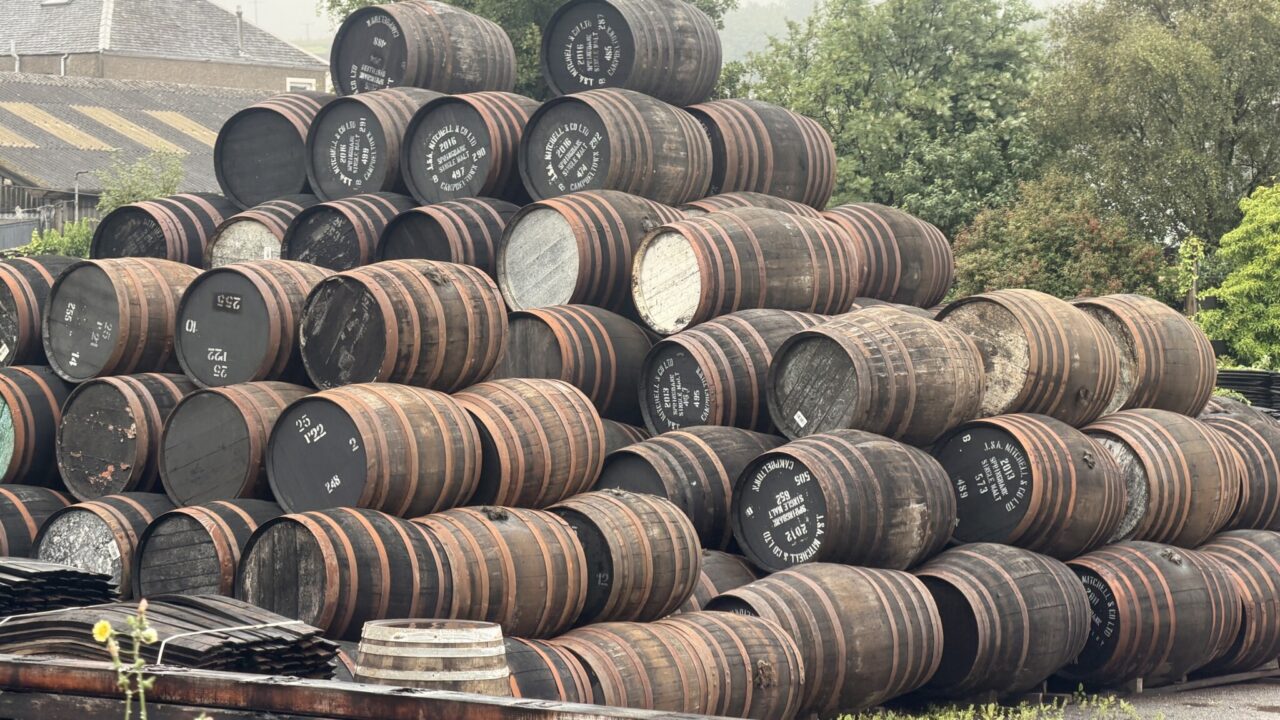
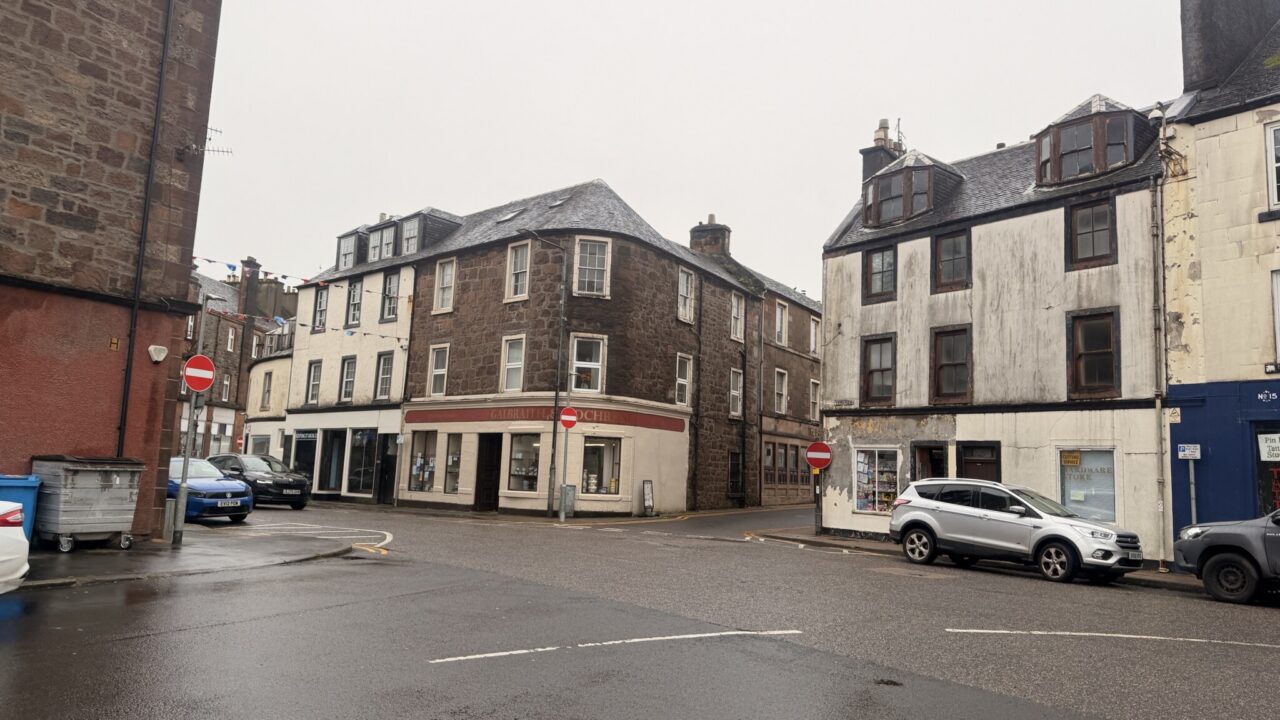
It has to be said that Campbeltown (pronounced “Cambledon”, like Wimbledon) is an unattractive town in an attractive setting. There was a working harbour, and further over a small marina, which was very nice, but once ashore it was reminiscent of a northern England mining town gone into decline. There were wide streets with grand old sandstone buildings, but many were derelict and many of the cafes were of the “greasy spoon” variety. It had been a boomtown in its day, with, at one stage, 27 distilleries. In the 1890s it had the highest income per capita in all of Britain. In the present day there are only two, Springbank and Glen Scotia. Springbank is still in the private ownership of the Mitchell family who have owned the distillery for 5 generations, while Glen Scotia is part of a consortium, the Loch Lomond Group.
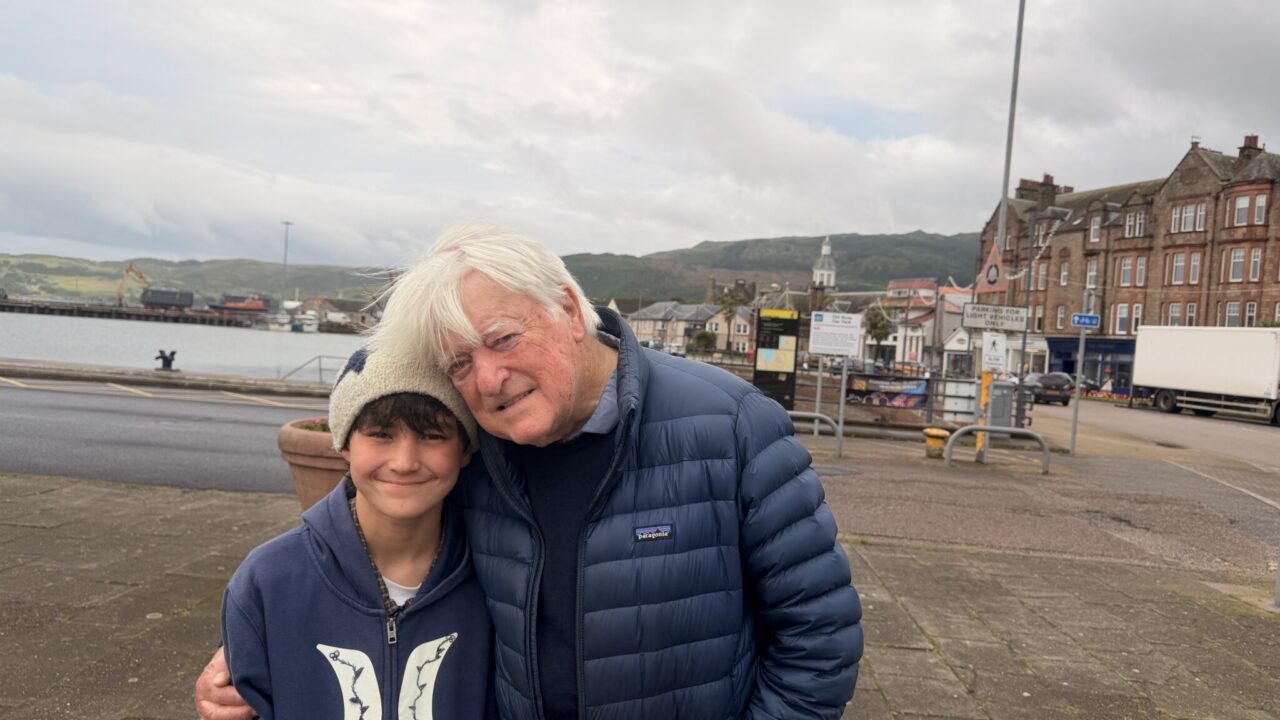
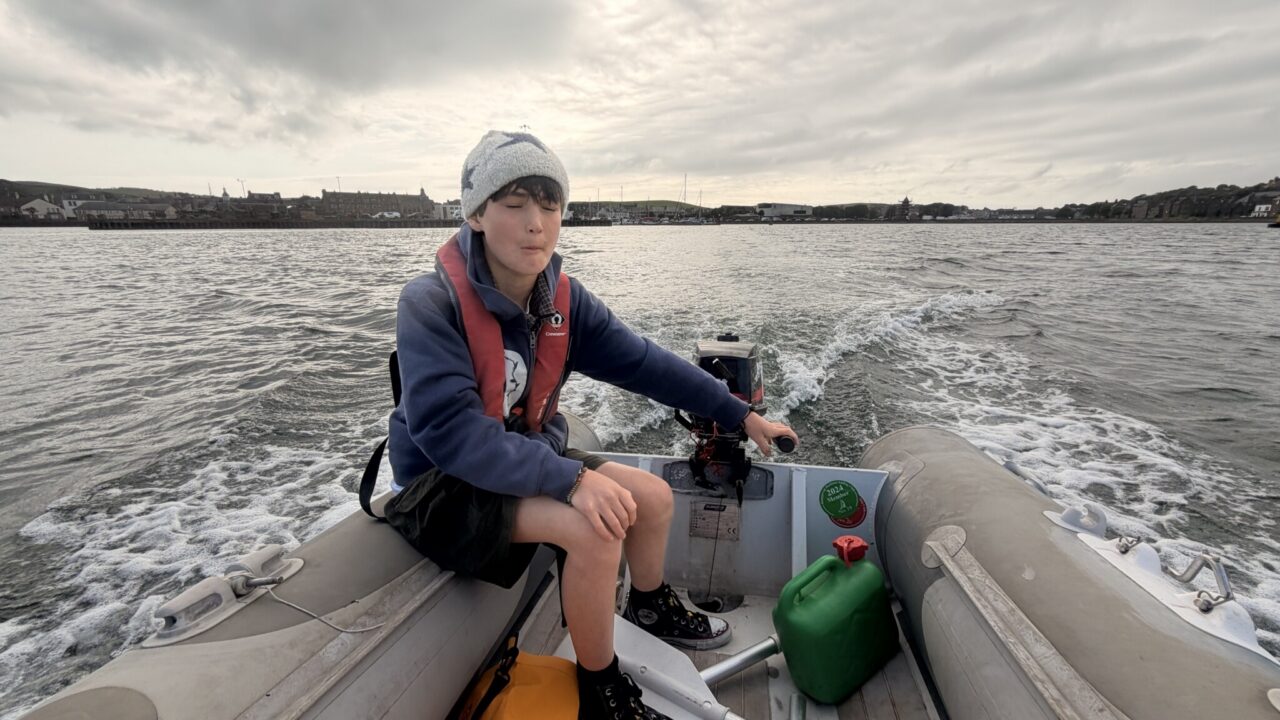
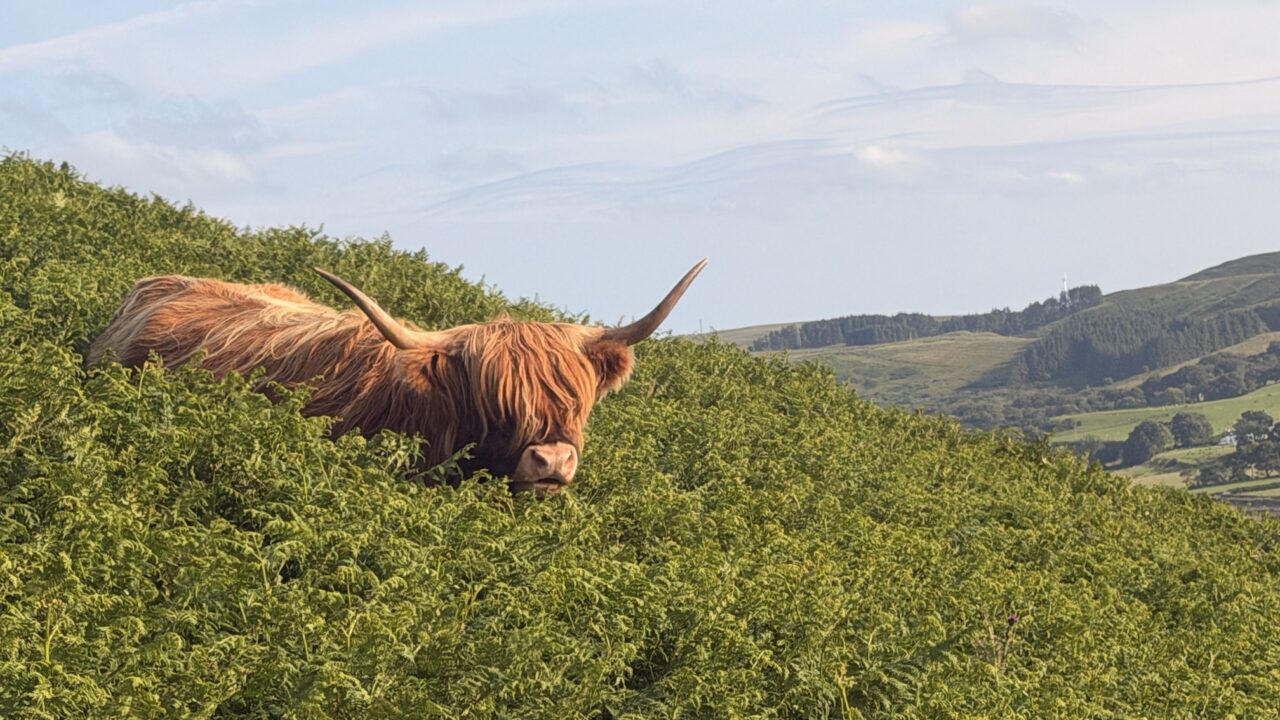
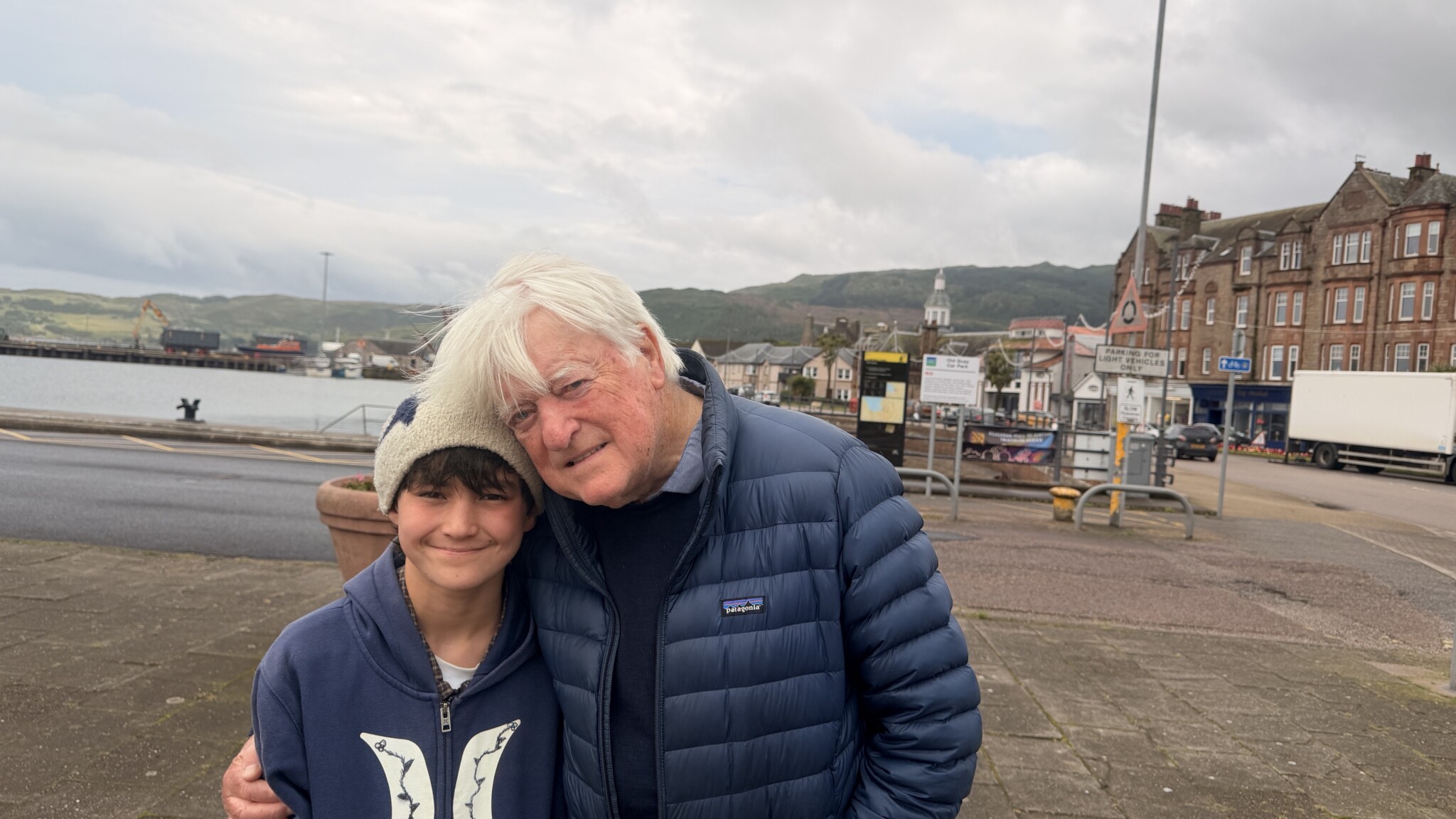
My Dad found the nearest hostelry, the Black Sheep Pub, while I went to the local chandlery to source a Saltire courtesy flag. While it was tempting to retire to the pub with Dad, I was conscious that I had a twelve year old who had been cooped up in the boat for days. For an adventure, Tomás and I headed out in the tender to Davaar Island which is normally linked to the mainland by a causeway and is therefore accessible on foot at low water. We hiked to the top of the island encountering Highland Cows among the bracken, their shaggy brown manes giving them a Rastafarian aspect. They seemed harmless but with their wide and sharp horns we did not want to put that to the test, giving them a relatively wide berth. On the way down we had a slight concern with the failing light and strong outgoing tide, just in case there was an issue with the engine for the tender. As a result we did not linger to investigate a sign for “Cave painting” pointing down the beach. This was a big mistake as it turned out that this was a very famous depiction of Christ on the cross painted in 1887 by Archibald MacKinnon in a sea cave on Davaar. MacKinnon was a local school art teacher who claimed to have had a vision, in which he was instructed to paint the mural in a sea cave on Davaar. In fairness it gives us a reason to visit Campbeltown again in the future.
The following morning, we awoke to horizontal rain and thick sea fog. It was in for the day, and we were going nowhere. It was a day for movies on the laptop and then the pub for dinner and the Argentina Egypt World Cup match. We did find time in the afternoon to visit the Springbank Distillery and to sample some of the local Whisky. In a way it was good to have a rest day after all the sea miles, although I really hoped it was not going to be like this for the whole week, especially with the knowledge that there was a heatwave back home. We were becoming regulars in the Black Sheep Pub at this stage.
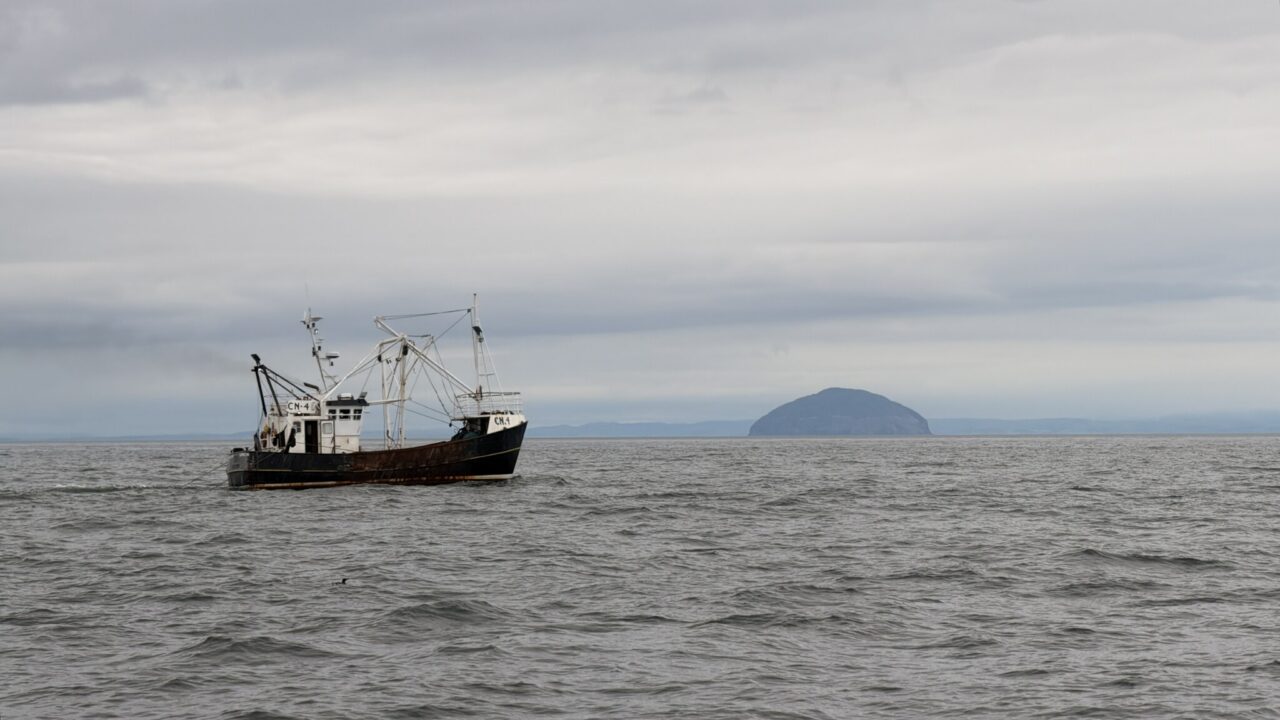
The next day was brighter and drier, but there was still a thick fog, which was forecast to burn off later in the day. Switching on the radar and carefully plotting waypoints, we ventured out. Our destination was Lochranza on the northwestern tip of the Isle of Arran, which the owner of the local chandlery had recommended as a nice anchorage. As we sailed on we could see targets on the AIS less than half a mile away that were completely invisible in the fog. The radar helped a lot as there were plenty of relatively large boats passing with no AIS installed, which was surprising. Looking on the chartplotter we were sailing along only a third of a mile from the coast of Arran, but with no sign of it in the fog. All of a sudden the fog cleared and Arran appeared, absolutely enormous, like some sort of magical island from Arthurian legend. The sun came out and it was now an absolute scorcher of a day.
Lochranza in these conditions was stunning. It was picture postcard stuff, with a misty castle and a high mountainous valley behind. We tied off to one of the public moorings and inflated the paddle boards, and Tomás and I went off to explore the anchorage. Tomás was intrigued by the jellyfish in the water and was busy with a bucket trying to catch one. I paddled closer to the jetty at the harbour. Without any warning, the still water broke only a foot from my board, a huge dolphin, one of the biggest I had ever seen. A moment later at least ten more, swimming over and back and under my board, looking up at me through the water. I shouted to Tomás and he paddled over. Another nearby paddle boarder asked could she stick with us, as it was a bit daunting all these huge animals all around us. This magical encounter went on for 20 minutes, and then they were gone, as quickly as they had come.
Although there was a pub ashore, the Lochranza Inn, it was closed Monday to Wednesday, and the distillery was closed and the only other shore attraction was a sandwich bar, also closed. The castle was a bit of a trek, so we made the decision to eat aboard and to enjoy the sunset from the boat. With the change in the weather, and a forecast for uninterrupted sunshine, the trip had suddenly switched from hardcore sailing adventure to Mediterranean holiday.