

A change of crew, and pace, Caladh Harbour, gatecrashing a sailing race in the Kyles of Bute, Tarbert
It was my dad’s last day, and Su Yin was arriving for the chill-out phase of the voyage. I had made an executive decision to abandon my original plan to do a dash to the Inner Hebrides. My reasoning was, with limited time, there were plenty of places in the Clyde that we could see, the water was likely to be relatively flat, and with an over-ambitious itinerary, there was a greater likelihood of weather or some unforeseen event kiboshing my plans. It was a holiday after all. There was also a risk of spending all our time on passage, rather than enjoying the places we were seeing.
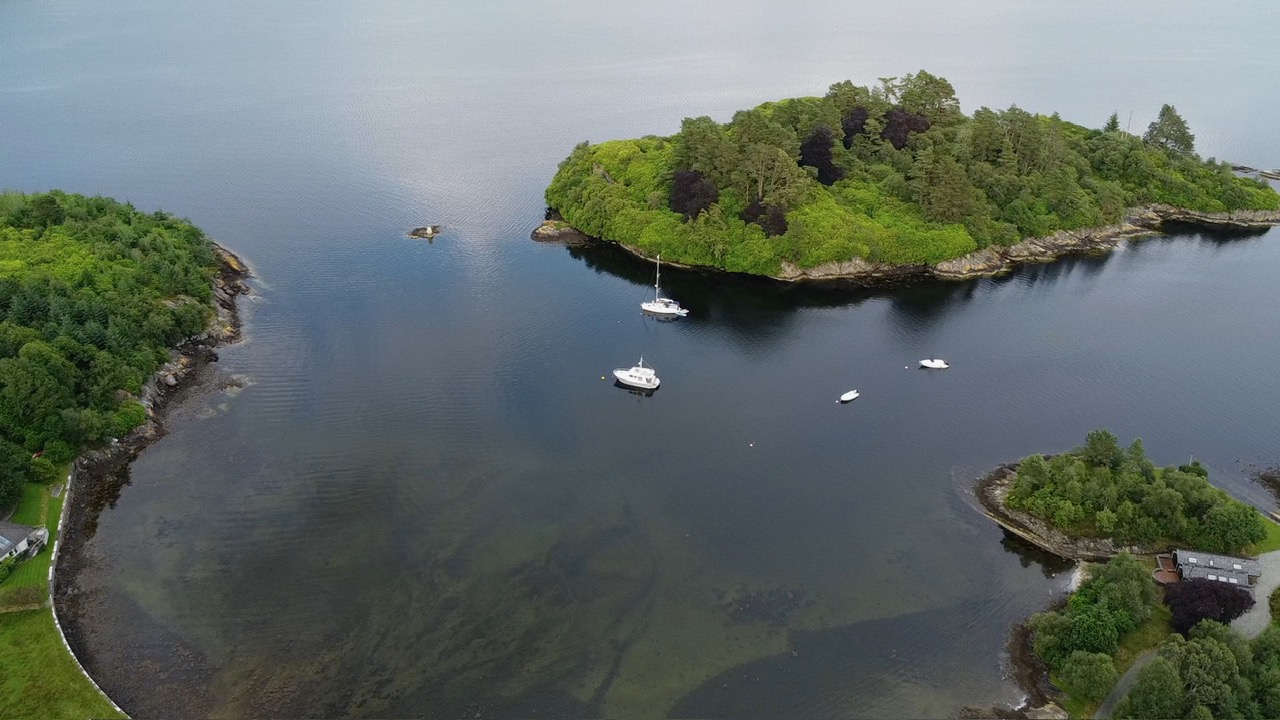
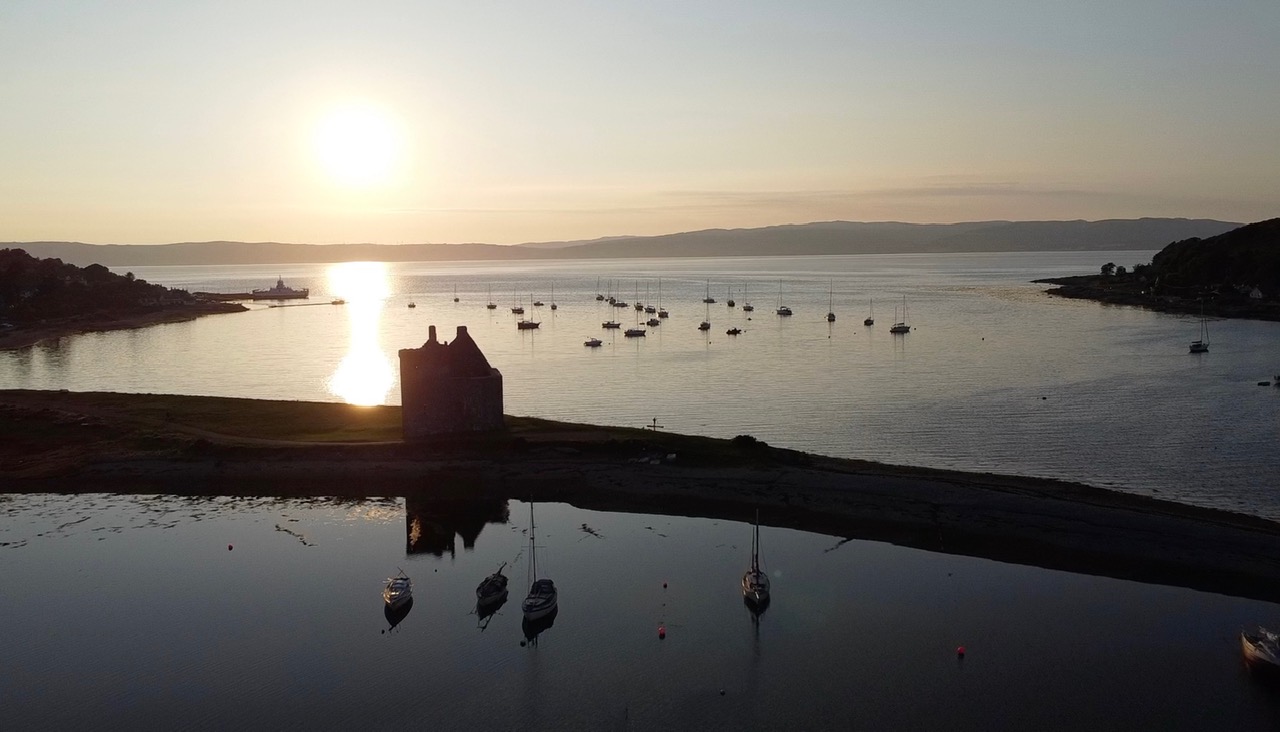
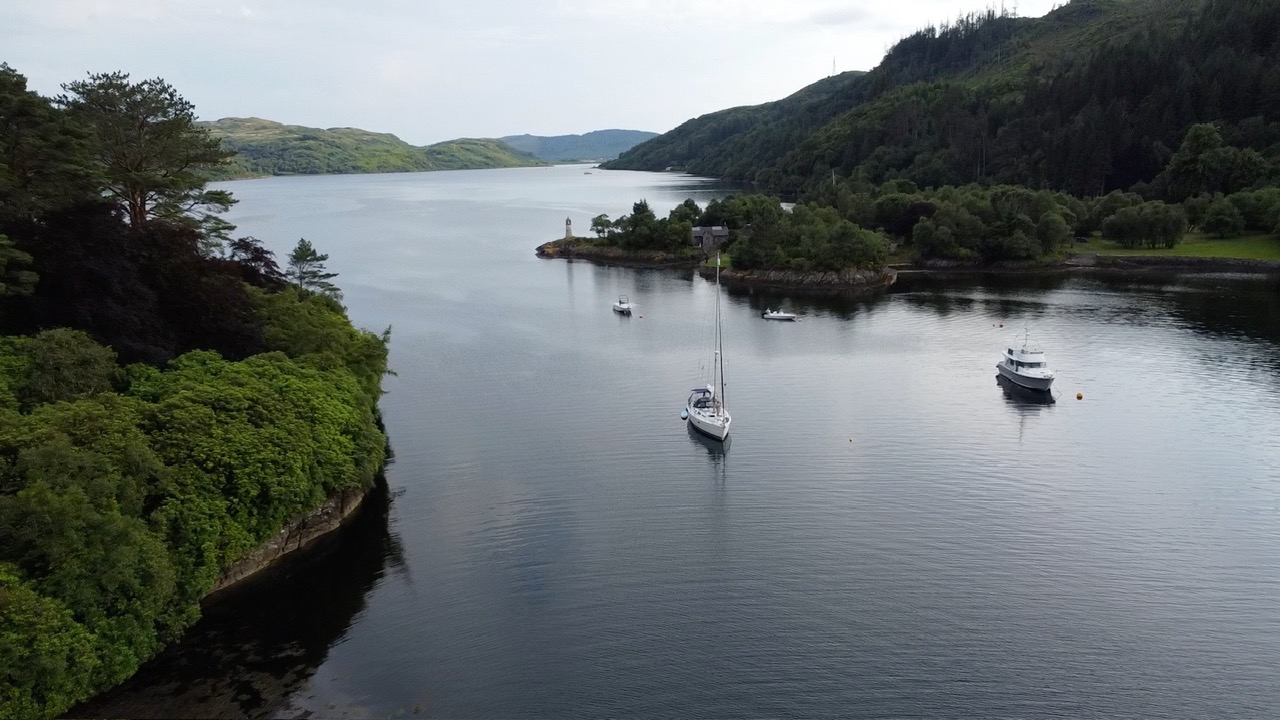
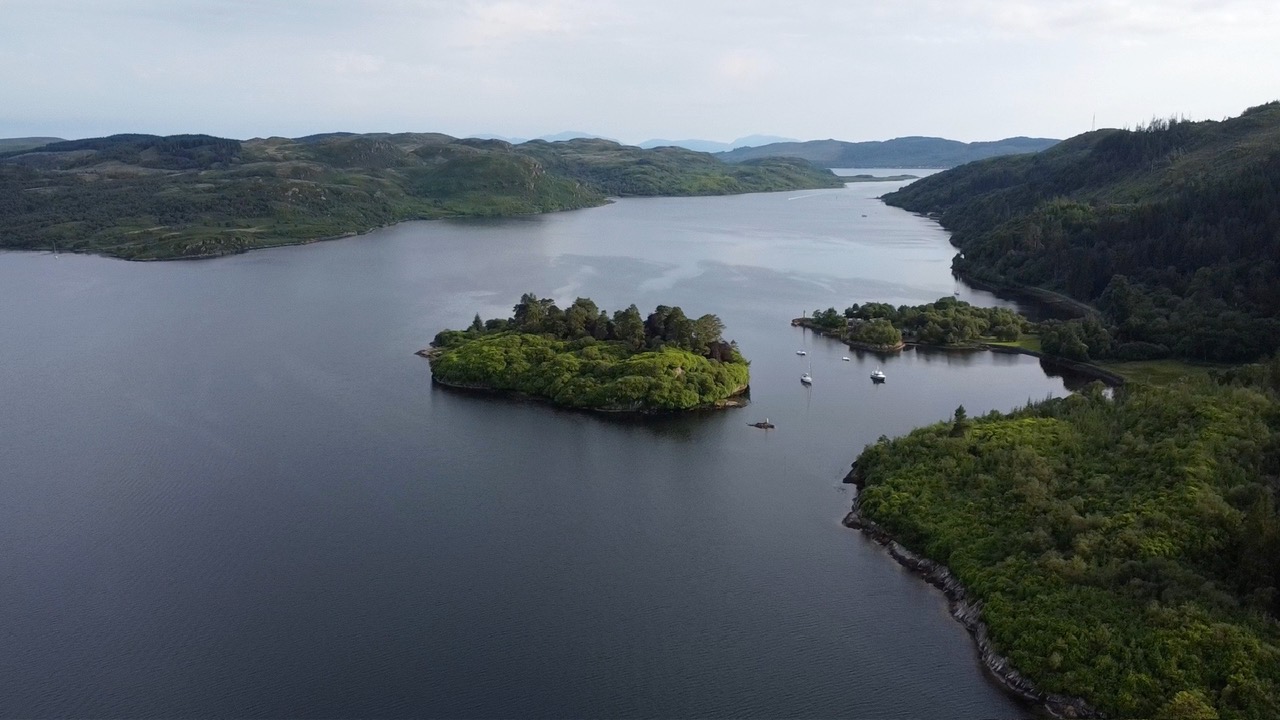
As a scouting exercise, and also to give Dad some nice scenery for his last day, I decided to sail to Inverkip via the Kyles of Bute. This is a narrow channel running up and over the Isle of Bute, the mainland interdigitating around the island with fjord-like scenery and beautiful calm anchorages. Passing the town of Tighnabruaich, I passed too far left and had to do a quick evasive manoeuvre to avoid an outlying mooring buoy. Just beyond, I noticed a stunning little anchorage called Caladh Harbour. A little redundant, given Caladh already means harbour, so the name meant Harbour Harbour. It was inside a lush forested islet with a steep hill on the other side. There was limited room for anchorage, but there was no other boat there at the moment, so I made a mental note for the following day.
Passing down the eastern Kyle, we got a brisk Force 4 breeze to take us past Rothesay. I had considered Rothesay for the crew change as there was a regular ferry and the ferry port on the mainland would be close to the train station, but ultimately I realised simple was best and headed for Kip. There were a few big ships crossing our path on the shipping channel, and I stuck to my strict policy of never crossing the bow of an oncoming ship. They are always much faster than they look.
The marina was very well appointed, and the chap on the desk was very chatty, telling me all about the “bloody English” and how the independence referendum had been rigged. I had also noticed a lot of anger about the Brexit vote among the Scottish people that I had chatted to. We had a nice informal meal at the restaurant overlooking the marina, but Tom Higgins was on a mission to find the real pub and the real people. We ended up in the local pub which was reasonably atmospheric, but there was a row going on between a really drunk guy and another group of really drunk people. It didn’t really seem like it was going to properly kick off, but the bar weren’t taking any chances, obviously. The police were in like a shot. It seemed like overkill to me.
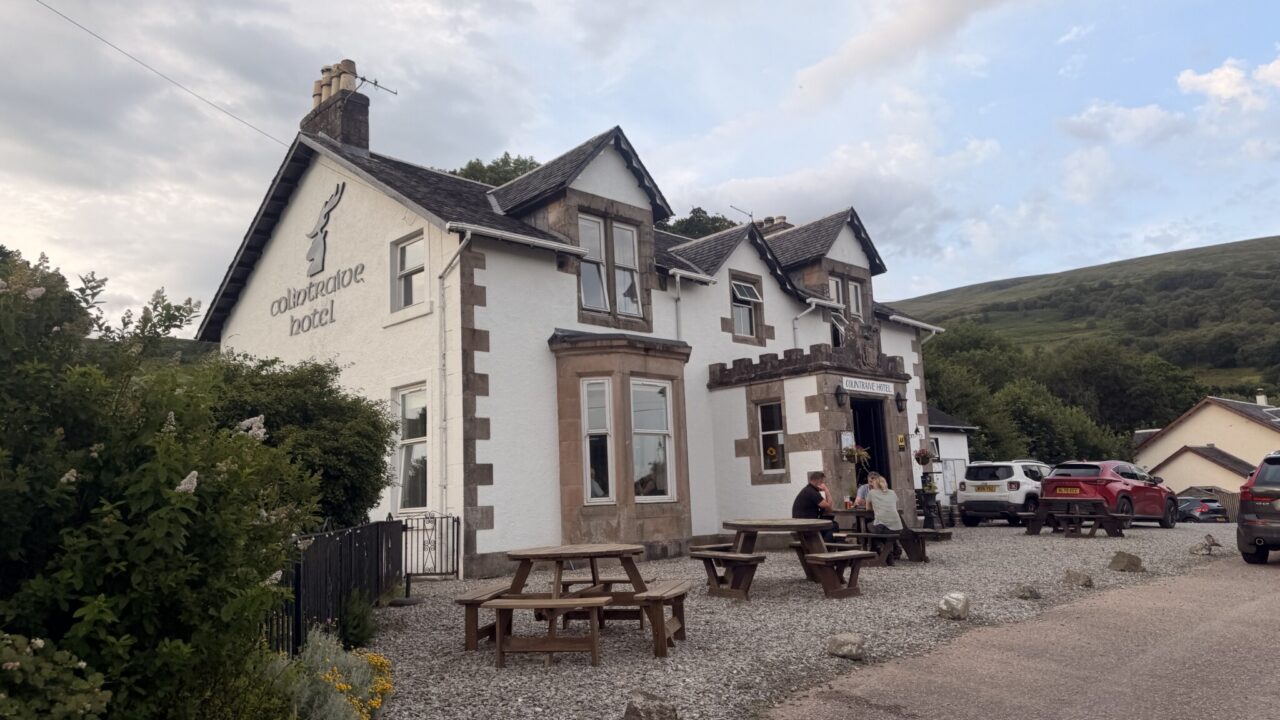
The next morning it was time to refuel, rewater and, most importantly, frantically tidy the boat for Su Yin’s arrival. Dad was off to the airport in the same taxi Su Yin had arrived in. I think he had had a great time and I hadn’t scared him too much, despite Force 6 southwesterlies all the way up to Bangor. He had been keeping his own WhatsApp blog for his buddies in the Anchor Bar. Su Yin had been expecting the worst and I think was pleasantly surprised that the boat was not totally chaotic or smelly. We wasted no time slipping our lines and we were off, with leisurely light-wind sailing back up the eastern Kyle, with Rothesay on our port side on the way back up. We had reserved a table for dinner at Colintraive Inn, which apparently was a must-do on the Clyde. The Inn had its own mooring buoys near to the slipway where the ferry docked. However, I had a curiosity about anchoring at Caladh Harbour, or failing that Wreck Bay, which one of the Scottish sailors in Inverkip had recommended as a fallback. I was planning to combine both and anchor in Caladh Harbour and then take the tender over to Colintraive Inn.
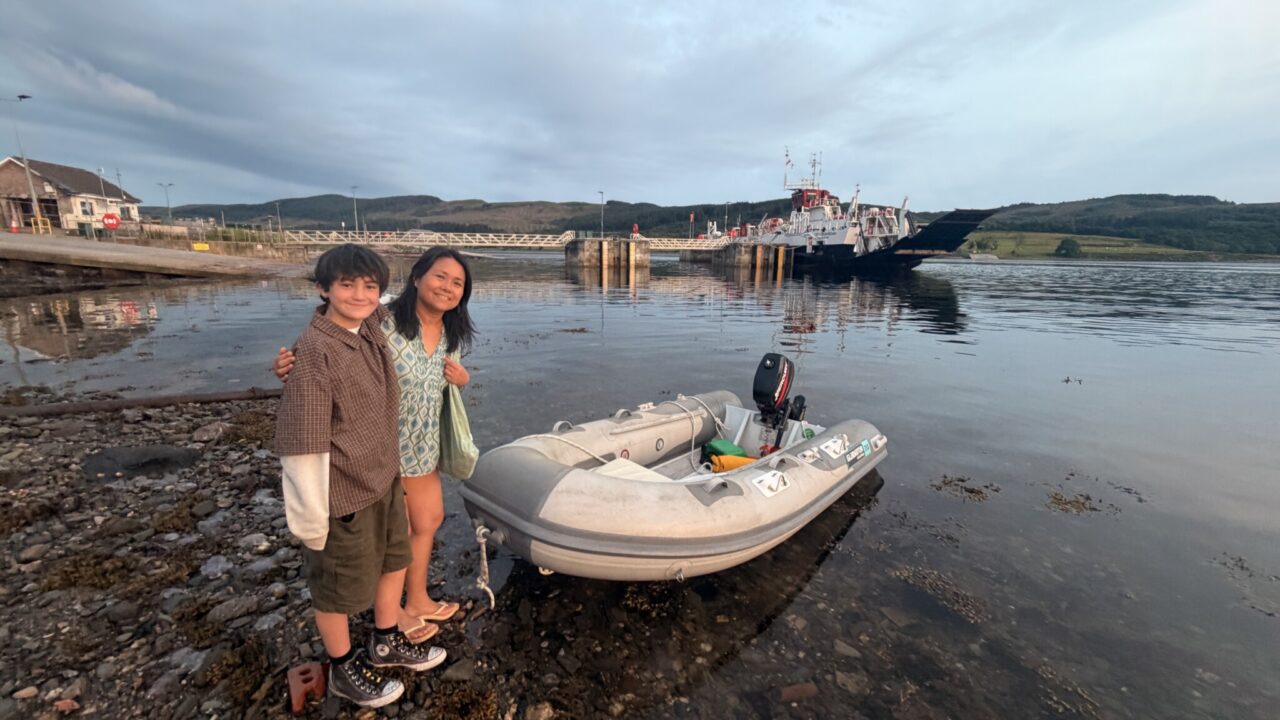
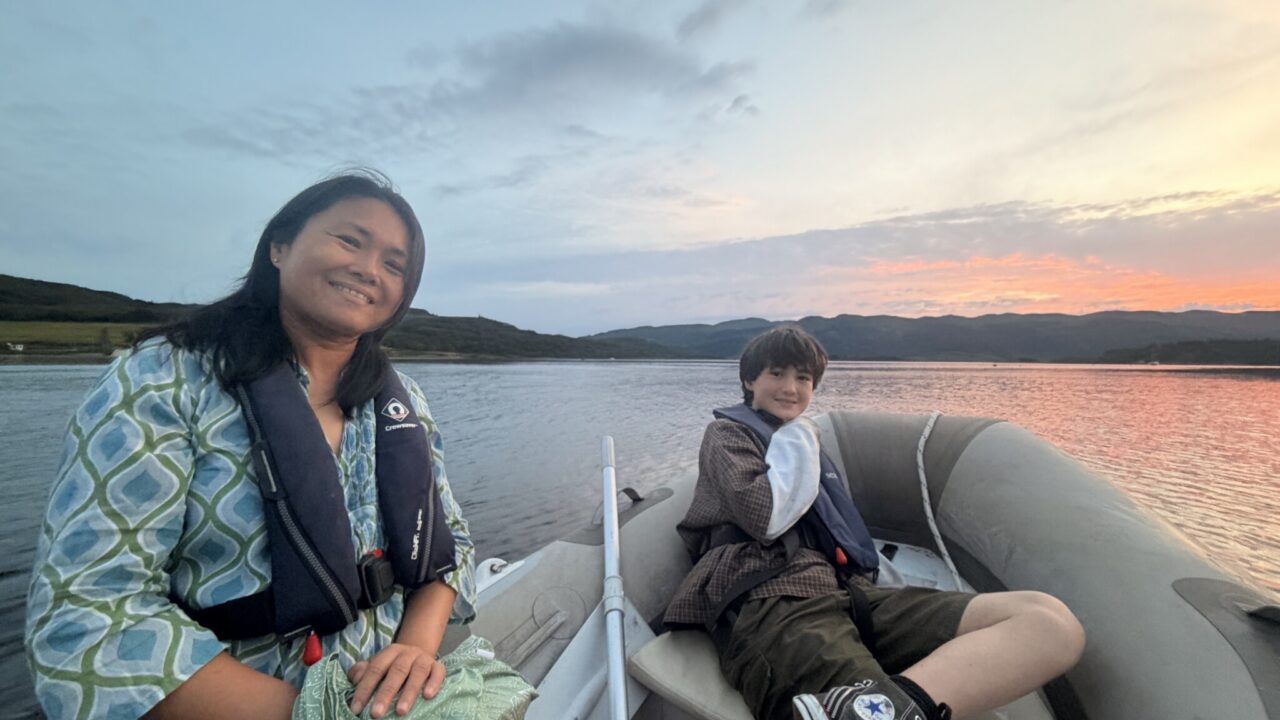
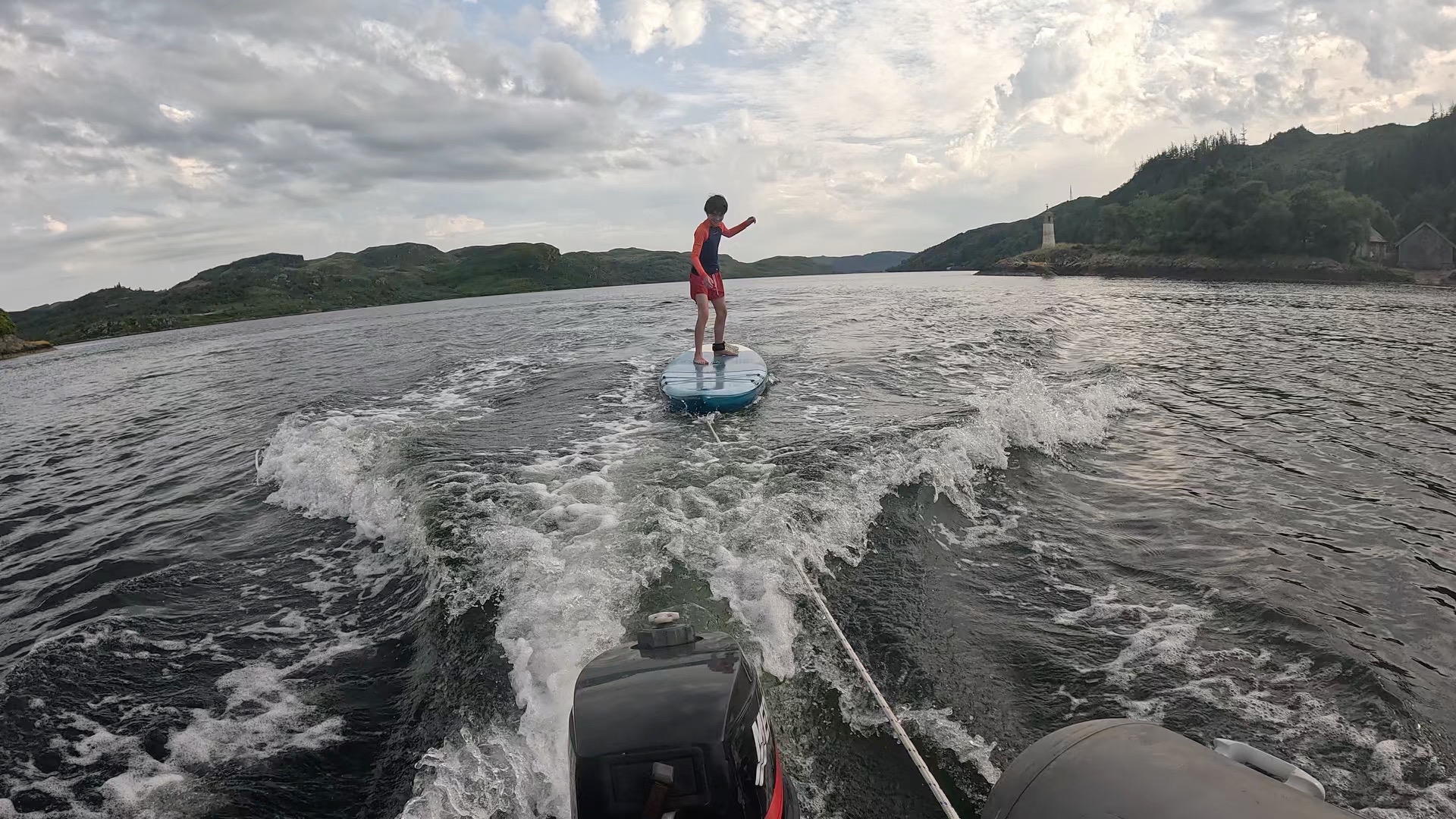
Approaching the Burnt Islands, there were two options: one south of Eilean Mòr, inexplicably with only one boat, while the anchorage north of the island was like a car park. To our relief, when we got to Caladh there were no other boats! We dropped the hook with a tripping line right in the centre of the five-metre hole marked on the chart in the centre of the little bay. It was disconcerting as we swung in different directions on our anchor, as we seemed to be getting close to the little island Eilean Dubh. Appearances were deceiving, as when we measured it on the plotter we still had plenty of clearance. This little anchorage was peaceful and beautiful and a real highlight of the trip. We swam and paddled about on the boards. I got out the tender and pulled Tomás along on the board, not having to worry about wake, having the place to ourselves. Finally, all our swimming done, we hopped on the tender for the two-mile hop over to Colintraive for dinner and a pint.
The Colintraive Inn was really not what I expected; I thought it would be a snooty sort of place, but it was a real locals’ place. There was a young guy, whose accent I could not at all understand, with a distinct farmyard smell, having a pint at the bar. He was in conversation with a really interesting older English retiree, Dave, who had made the area his home. He told me that he had kayaked most of the lochs around the Clyde. He had originally been a pilot in the RAF and had also worked in Saudi Arabia, training pilots. He told me sadly that, when he was stationed in Aden, he had come to realise that the terrorists he was fighting were actually freedom fighters, and he came to believe, at least in this instance, that he was on the wrong side; he therefore left the RAF and retired to Scotland. I could have chatted to him all day as he had all sorts of interesting insights about current geopolitics, especially Iran, but it was time for dinner and he was leaving anyway.
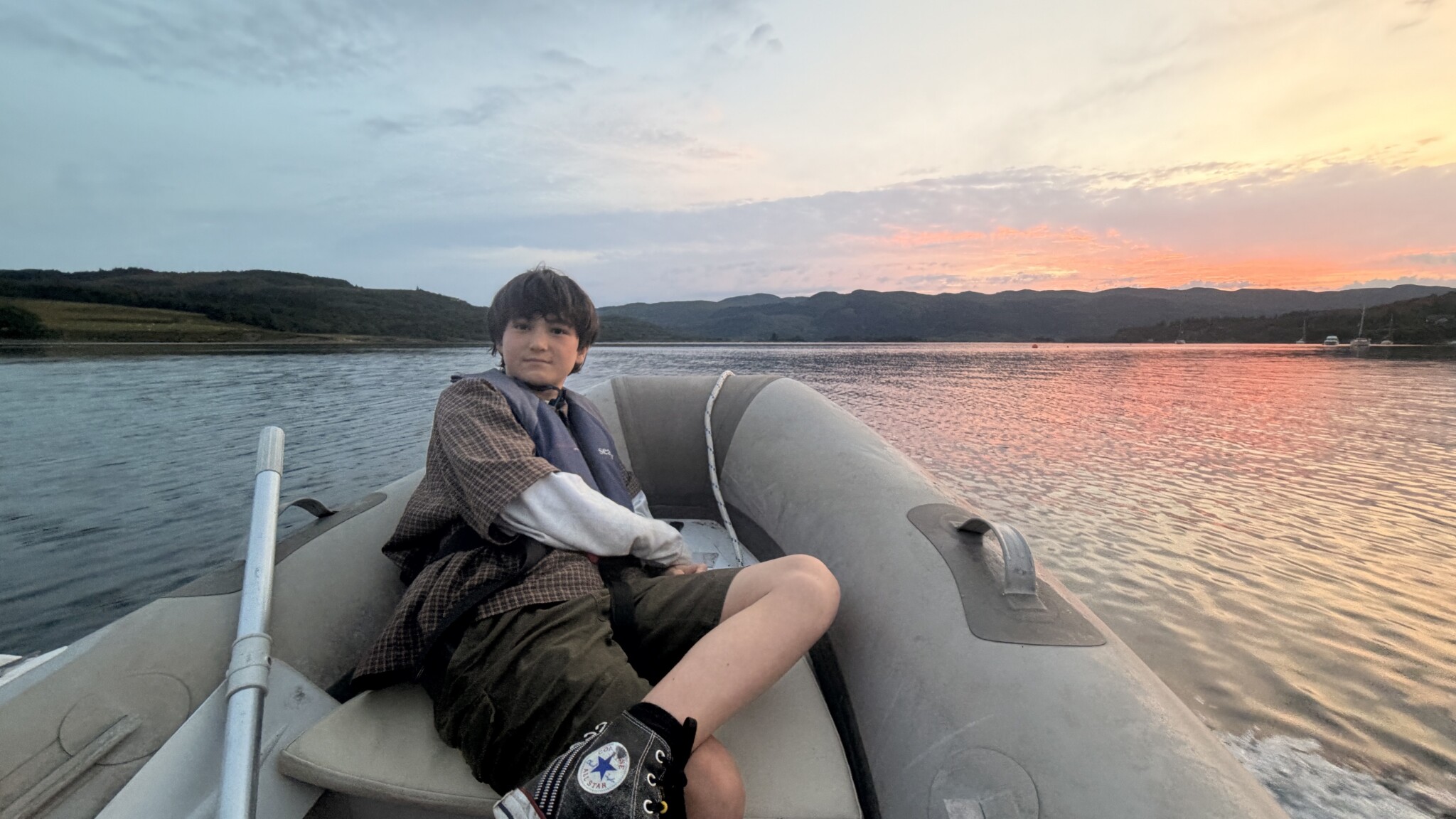
We had no worries about returning in the dinghy in the dark. I did have lights, but they were unnecessary; the sun didn’t set here until 10:00 pm and the light didn’t fade completely until 11:30 pm or so. When we got to the anchorage we had another yacht for company, but they had moored further out, outside the harbour. We settled in for the night, the water completely still.
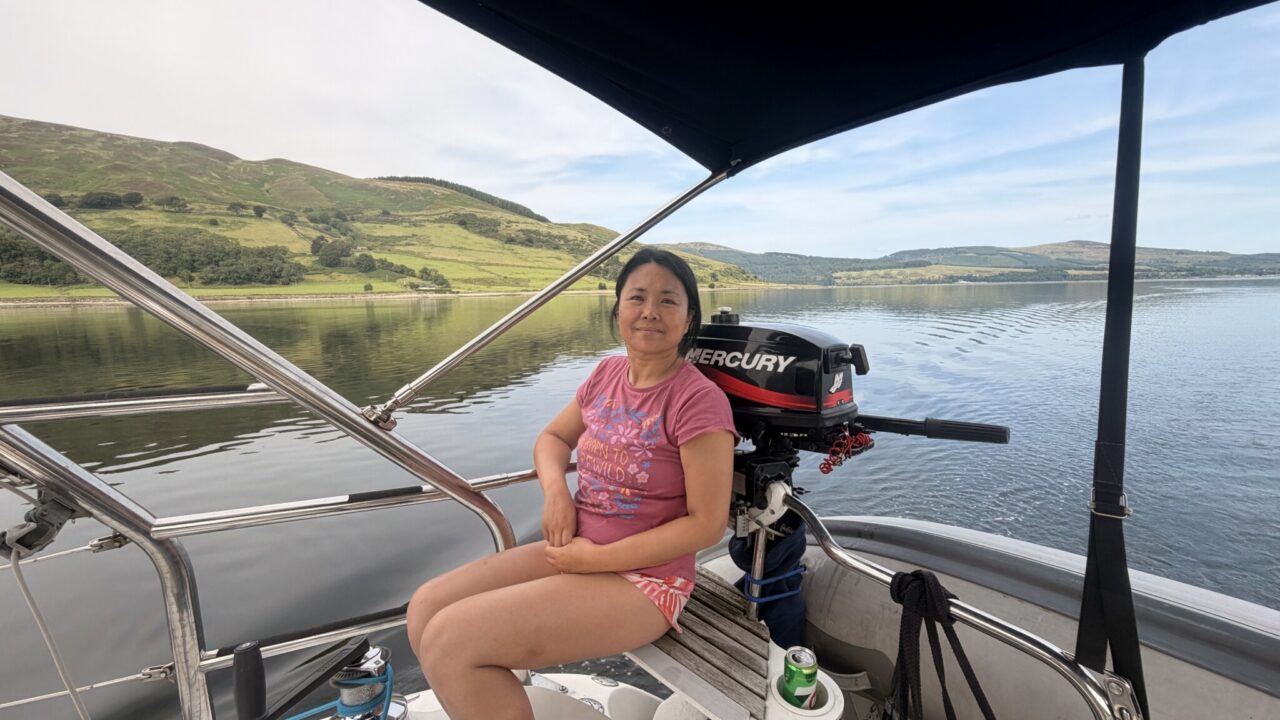
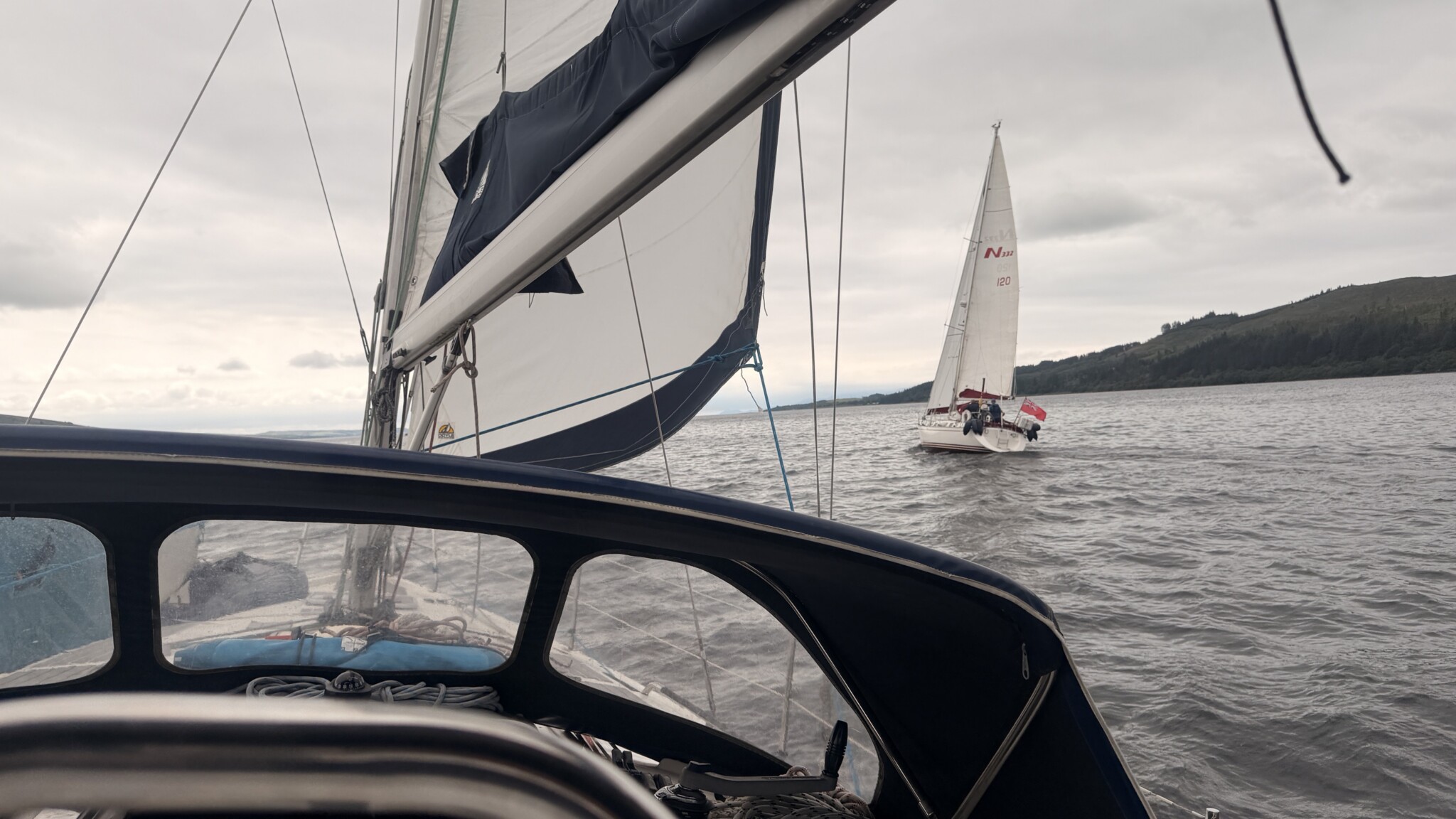
The next morning we left mid-morning, making for Tarbert on the Mull of Kintyre side of the lower part of Loch Fyne. I had an inkling to head up all the way to Inveraray, having been there years ago on a family holiday, but it was a five-hour cruise up and the same back, so we stuck to Tarbert. As we came out of Caladh, we emerged into a fleet from Rothesay (as we would find out later) having a club race from Rothesay to Tarbert. As the wind stiffened and we came onto a close reach, we and the fleet around us gained speed. I couldn’t resist; I upped my game and unofficially gatecrashed their race. I was steadily gaining ground on the 36-foot yacht ahead. Would it be “not the done thing” to take a line to windward, thus tactically stealing his wind as I passed him? I couldn’t resist, I confess. As I passed them, wet-weather-geared up to the max—six of them, three on the rail—I gave a little wave, alone at the helm, with a 12-year-old reading and Su Yin wrapped up in a sleeping bag. I was risking getting a hiding when I got to my destination.
As we took the sails down off Tarbert, we had “a little moment” when I went to start the engine, as the crank battery was dead. I had thought it was isolated from the house, but the switch was set to “Both” and we had been sailing all day, and therefore we had been drawing off both batteries. Both were dead, and now the engine would not start. There was one momentary panic as I had visions of having to ask for a tow into Tarbert, and then I remembered that I had made an impulse purchase on Temu of a battery jump-starter, and it was somewhere in the bowels of the boat. There was one frantic scramble to find it, and then another to fling out of the port locker lots of “random crap” to access the crank battery. The clips were attached and “eureka!”—the engine started. Crisis averted, on we go. Thank God for impulse purchases.
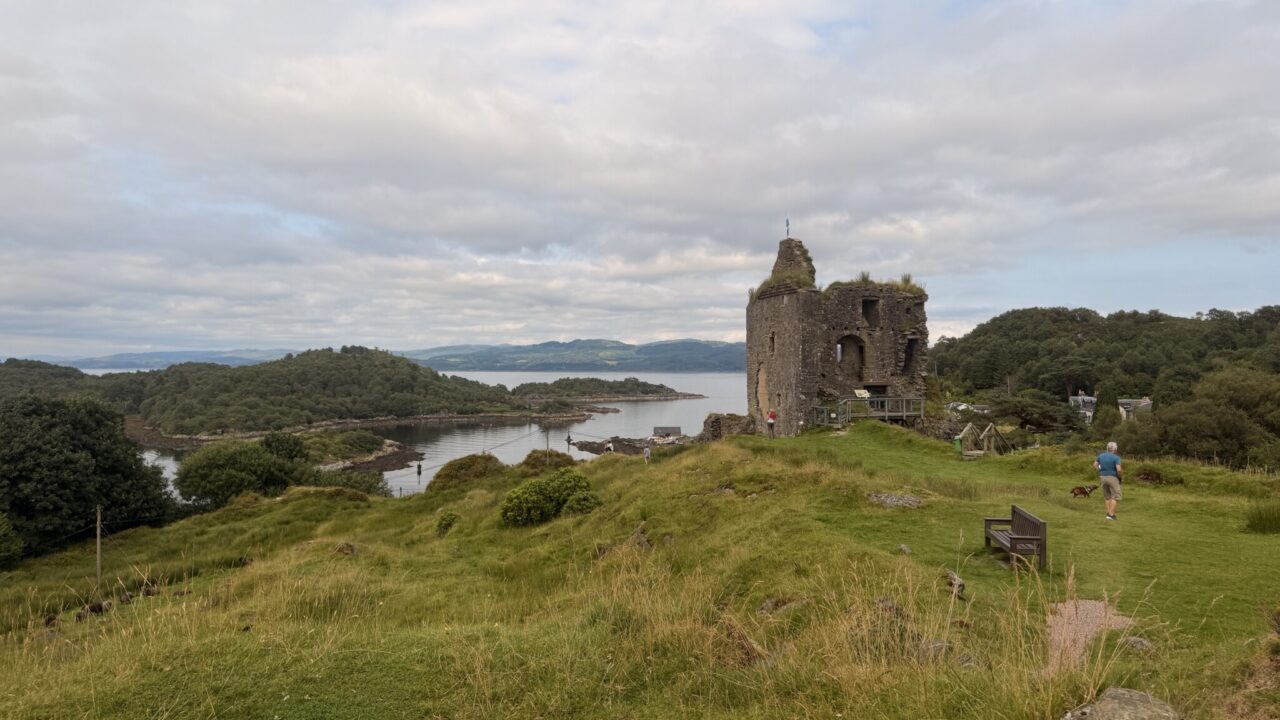
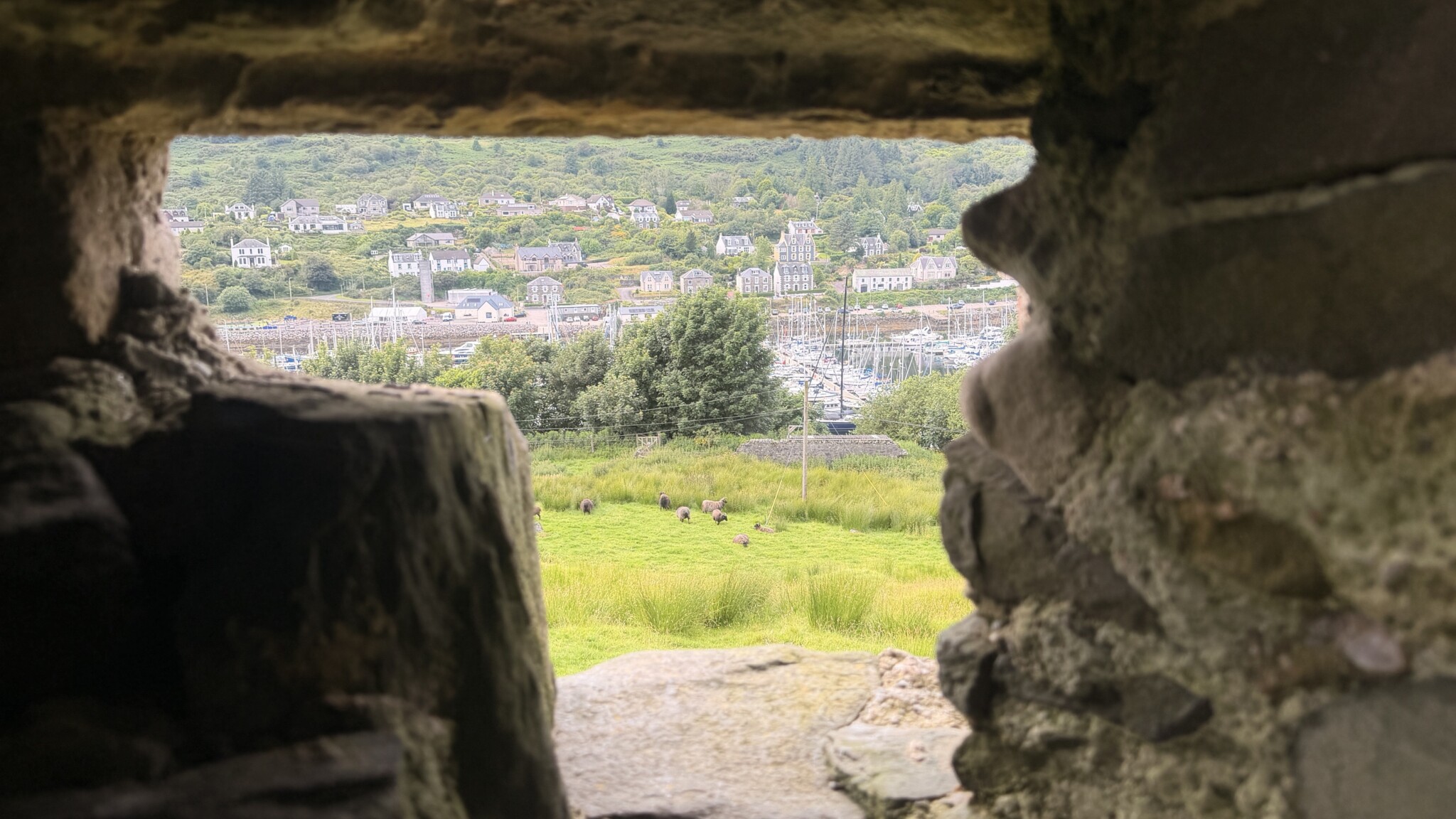
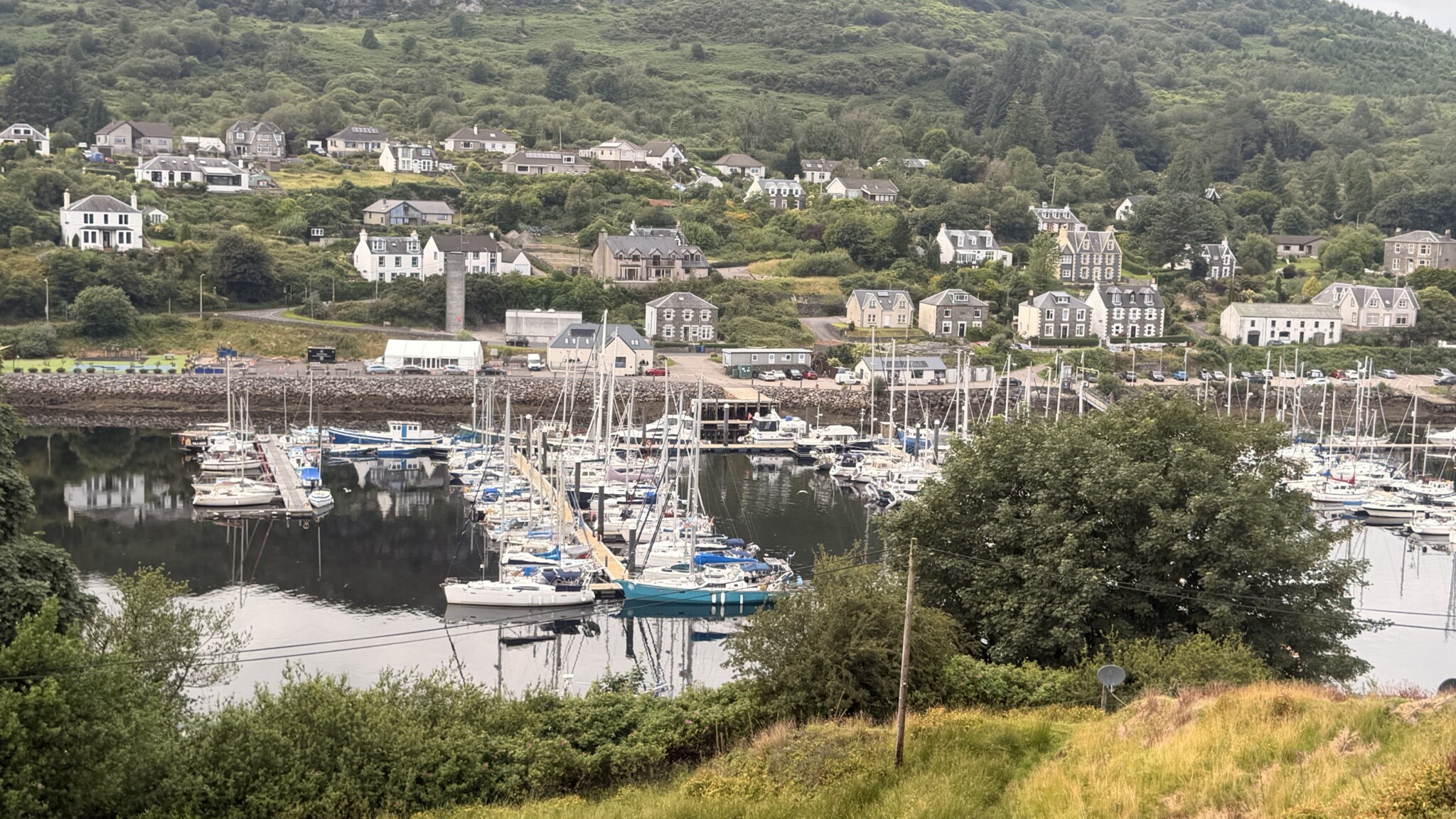
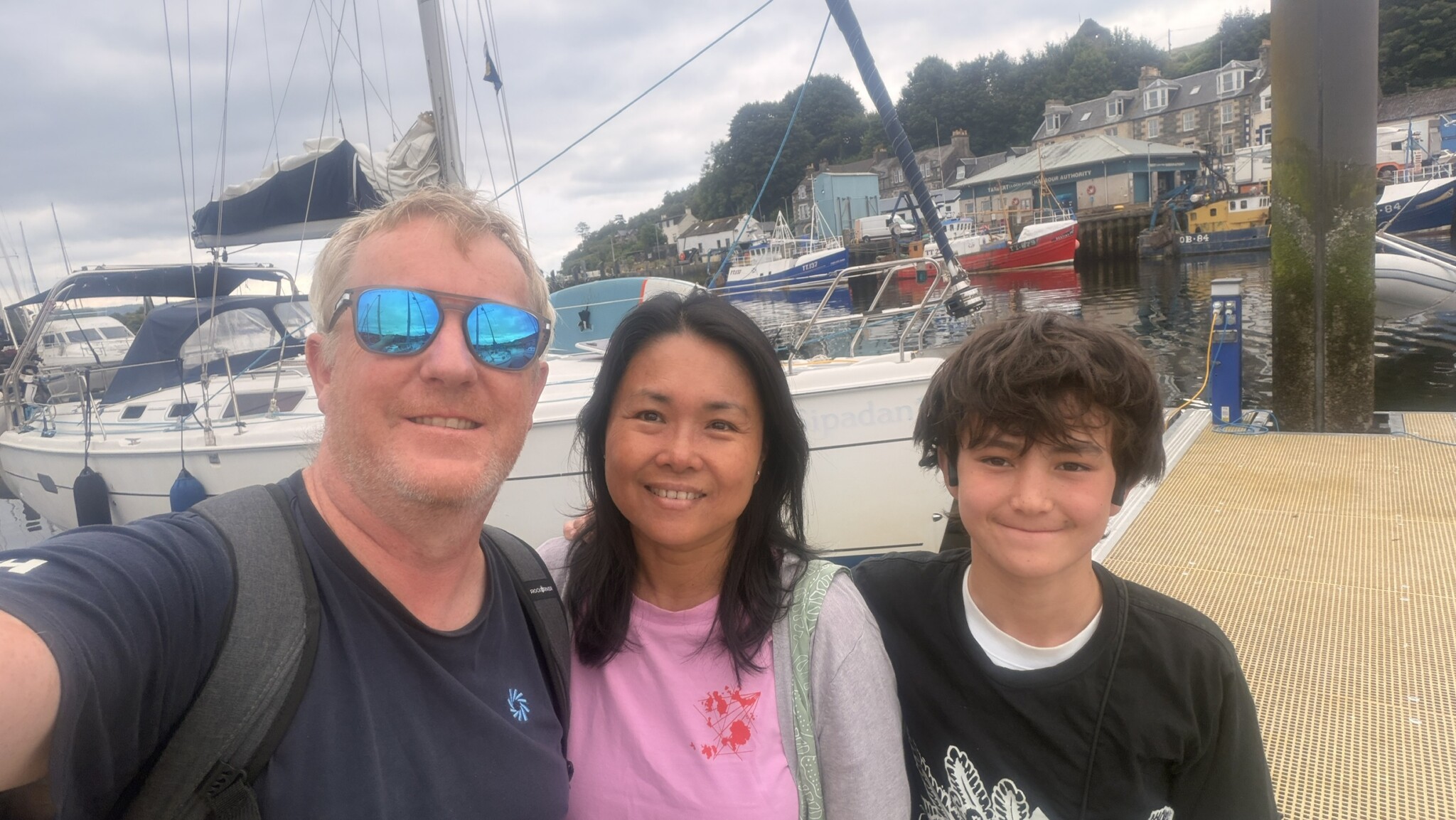
Tarbert was a nice little place, more like what I would have expected of a Scottish fishing village in comparison to Campbeltown, further south. There was a nice marina with nice facilities and a small chandlery. There were lovely marked walks in the nearby hills, leading from the little ruined castle overlooking the harbour. We opted for the five-kilometre option, which had lovely views up Loch Fyne, but with the scorching hot weather we nearly expired from the heat—an unusual complaint for Scotland.
Later on, we went into the local pub for the World Cup quarter-finals, where there was an even split between English holidaymakers supporting England and the locals finding a newfound love for Norwegian football. At one stage, an extremely brave English visitor at the front, who had been busy expressing exasperation with his own team’s performance, turned around to the Scottish pro-Norway contingent and said, “You lot haven’t gotten your independence yet, so you should remember which team to support.” This was greeted by a stony silence. As far as I know, he is still in the land of the living!